A Village for the Soul
Why do we actually need the El Pueblo community? You start asking yourself this question at the latest when you are standing in front of a mountain of bureaucratic hurdles for the first time or trying to convince an old stone house that it has charm even without permanent drafts. El Pueblo is our answer to a feeling many of us share: that life, as it is often served to us, somehow misses the point, caught between appointment calendars bursting with importance and the constant hunt for a perfection that nobody achieves anyway. Our “Why” begins exactly at the point where we stopped merely functioning.
El Pueblo Community
We don’t believe in flawless facades. Perfection, anyway, is usually just a very expensive form of boredom. In El Pueblo, life is allowed to have rough edges. We aren’t looking for the perfect village from a glossy magazine, where not a single blade of grass stands askew. We are looking for a place that breathes. A place where we are no longer just dreaming of a different lifestyle while sitting in traffic, but where we drink our coffee in the morning and know: This here is alive. It is the attempt to finally put the theory of the “good life” into practice, without getting spiritually detached.
- Rejection of flawless facades and perfection in favor of an authentic, living environment.
- Putting the theory of the “good life” into practice, away from constricting systems.
- Experimental field for new ways of living together, balancing community and solitude.
- Daily practice of conflict resolution and balancing closeness and freedom.
- Curiosity-driven, natural education focused on true unfolding instead of self-optimization.
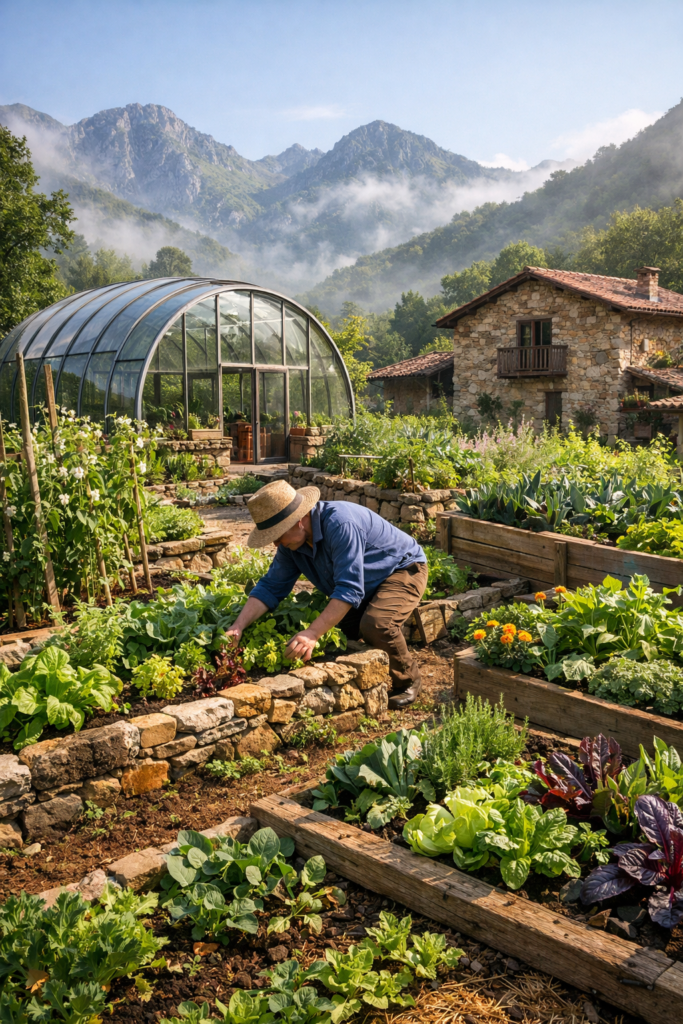
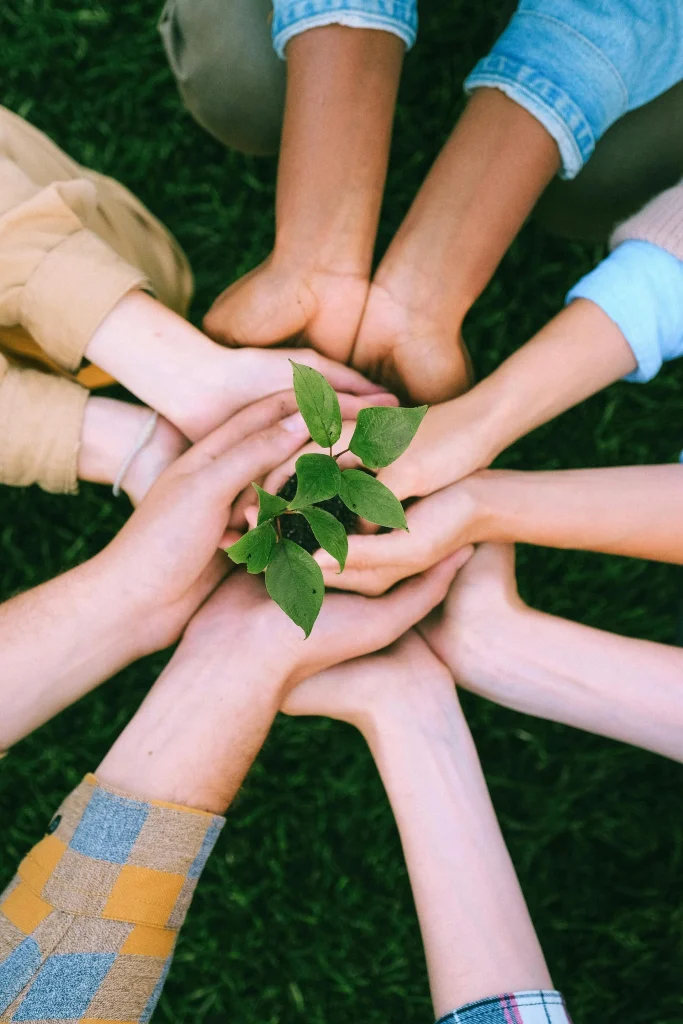
For us, it’s about a conscious decision. We asked ourselves why we so often let ourselves be squeezed into systems that constrict rather than inspire us. El Pueblo is an experimental field for new ways of living together. That may sound like a grand vision, but in everyday life it often means quite simple things: How do we treat each other when things get difficult? How much community do we need to not feel lonely, and how much solitude to not go crazy? It’s a dance between closeness and freedom that we re-learn here every day.
In this context, the topic of education is particularly important to us. Not the kind of education that you endure in grey rooms, but one that arises from curiosity. We want to create a space where learning becomes something natural again. A place where children (and we adults too, by the way) are allowed to discover what truly moves them, instead of just cramming for an exam whose content you’ve forgotten three days later anyway. It is the end of selfoptimization in favor of true unfolding.
Ways Out of the Hamster Wheel
Sometimes modern life feels like a hamster wheel that looks like a career ladder from the inside. We run and run, but the view hardly changes. El Pueblo is the attempt to simply jump off, maybe not elegantly, maybe with a little crash landing in the high grass, but at least with solid ground beneath our feet. We want to move away from purely optimizing our functioning and towards a regulation that allows our bodies and souls to find peace again.
In a world that constantly whispers that we must be even more productive, even fitter, and even more radiant, we bet on simple being. This has nothing to do with laziness. Anyone who has ever tried to get a self-sufficient project off the ground knows that you sweat more there than in any air-conditioned gym. But it is a different kind of effort. One that creates meaning, because you can see, feel, or even eat the result of your hands’ labor in the evening.
It is the reconnection with the essential, without damning progress. We are not enemies of technology. We use the new to make the old worth living again. It is the combination of modern thinking and archaic being. This requires courage, because it also means giving up cherished securities. But what is security worth that leaves us empty inside? We trade the artificial security of the system for the inner security of a community that supports each other.
El Pueblo Community
We are social beings, even if the internet sometimes makes us believe that a thumbs-up under a photo is enough social interaction. However, true community is demanding. It is like a mirror in which you stand unkempt in the morning; it shows you aspects of yourself that you can wonderfully ignore in the anonymity of city life. But that is precisely where the healing lies. In El Pueblo, we want to use this friction to grow together.
It is not about everyone thinking or doing the same thing. God forbid, that would be the direct path to the next ideology. It is about the diversity of talents and perspectives. One person knows how to install solar panels, another understands how to bring people together in conflicts. It is these synergies that bring a place like El Pueblo to life. We are not just building houses out of stone here; we are building an invisible network of trust and cooperation.
This form of living together requires a new emotional intelligence. We must learn to communicate our needs clearly without overwhelming others. It is a daily exercise in self-responsibility. No one is here to save or teach anyone else. We accompany each other on a path we are all walking for the first time. That makes us vulnerable, but also incredibly strong.
The Power of Nature
We have often forgotten that we are part of nature, not its conquerors. In El Pueblo, nature is not a backdrop for our lives; it is the foundation. When we feel the rhythm of the seasons again, when we realize that the earth nourishes us, when we show it the necessary respect, our inner structure also changes. We become calmer. We become more patient, inevitably, because a tomato simply cannot be moved to grow faster by a motivational seminar.
Nature teaches us the humility that we often lose in the digital world. It reveals chains of cause and effect to us that we no longer see in the artificial light of offices. If it doesn’t rain, the ground becomes hard. So simple, so immediate. We seek this clarity. We want to directly experience the interactions between our actions and our environment again. This restores a grounding to us that has become the most precious commodity in an increasingly complex world.
This place is intended to be a refuge, but not an ivory tower. We do not close our eyes to the problems of the world; we try to work out solutions here on a small scale that might perhaps set an example on a large scale someday. It is a departure into a future that we actively shape, rather than passively endure. A courageous forward-thinking that has no fear of mistakes, but conceives of them as necessary fertilizer for new insights.
The primary motivation is to escape a life that often “misses the point,” moving away from purely “functioning” within restrictive systems, endless schedules, and the hunt for perfection. Instead, El Pueblo aims to create a place that is “alive,” where people can put the theory of the “good life” into practice.
The community actively rejects “flawless facades” and views perfection as a “very expensive form of boredom.” Instead, it embraces life’s “rough edges” and seeks authenticity over appearance. They see challenging “friction” in community life not as a negative, but as a mirror for self-reflection and a necessary catalyst for collective growth.
The text advocates for education that “arises from curiosity” rather than forced learning in “grey rooms.” It aims to create a natural space where both children and adults can discover what truly inspires them, ending the culture of self-optimization in favor of “true unfolding.”
The community is not against technology or progress; they aim to use “the new to make the old worth living again.” They combine “modern thinking and archaic being.” This involves trading the “artificial security of the system” (which can leave one empty) for the “inner security of a community that supports each other.”
Nature is seen as the foundation because reconnecting with its rhythm and realities teaches humility and patience (e.g., a tomato cannot be rushed). It provides a necessary clarity on cause and effect (e.g., no rain makes the ground hard) and offers essential “grounding” in an increasingly complex and artificial world.